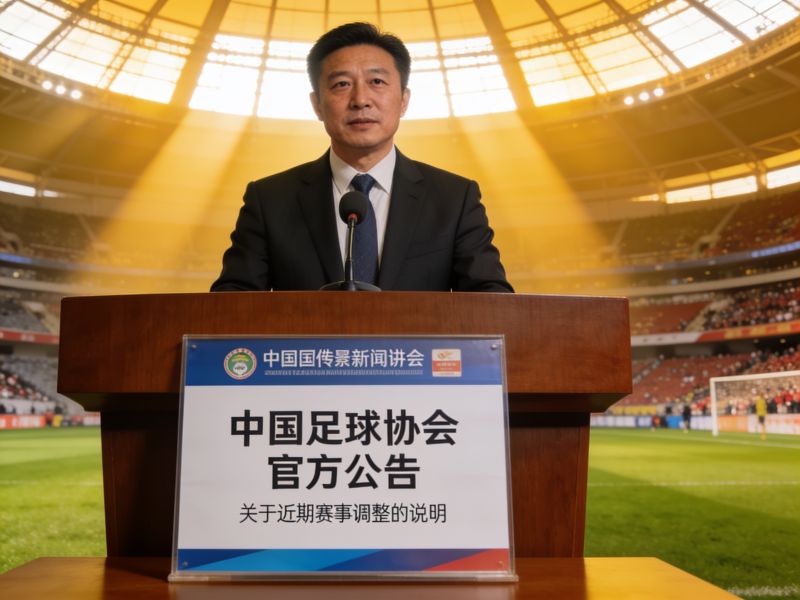
he Chinese Football Association’s announcement revealed the reasons for Yang Shuai’s dismissal。linking the decision to a combination of management concerns, disciplinary issues and inadequate sporting results. The statement offered a sharper explanation than the brief personnel notice initially circulated among Chinese football followers. Rather than describing the move as a routine adjustment, the association presented it as a response to problems that had accumulated over time. The wording suggested that Yang’s departure was not caused by one isolated match or a single disagreement, but by a broader failure to meet the standards expected from a senior figure in the game. That distinction matters in a football system where official announcements are often short on detail and leave clubs, players and supporters to fill in the gaps themselves.
According to the announcement, Yang had been judged unable to maintain effective control over key areas of his work. The CFA pointed to weaknesses in internal coordination, decision-making and the implementation of team or organizational requirements. Those shortcomings can appear minor when viewed separately: a delayed response to a club issue, unclear communication with staff, or inconsistent enforcement of rules. Together, however。they can damage an entire working environment. People close to Chinese football have often described the difference between a stable dressing room and a troubled one as a matter of daily management rather than dramatic confrontation. Training begins late, responsibilities become blurred, and players receive mixed signals. The CFA’s wording indicates that officials believed this pattern had become serious enough to justify removing Yang rather than waiting for a gradual correction.The Chinese Football Association’s announcement revealed the reasons for Yang Shuai’s dismissal also through its emphasis on discipline and professional conduct. The association did not publish every internal detail, but its language made clear that compliance with institutional rules was part of the decision. In Chinese football, that can cover attendance, reporting procedures, communication with supervisors。conduct during official duties and the handling of sensitive team matters. A disciplinary problem does not always involve a public argument or a headline-making incident. Sometimes it is reflected in repeated failures to follow established processes. That is why the announcement has attracted attention beyond Yang himself. It signals that the CFA wants technical ability to be judged alongside reliability, accountability and respect for administrative authority. For coaches and officials working under pressure, the message is uncomfortable but straightforward: strong results will not automatically protect a person whose conduct is considered disruptive.Performance was another central factor. The announcement connected Yang’s dismissal with results that fell below expectations and with concerns about whether the existing approach could produce improvement. Football losses are rarely enough。on their own, to explain a formal dismissal. A team can lose while showing progress, discipline and a clear plan. The harder situation is a run of poor results accompanied by tactical confusion, weak preparation or an inability to respond during matches. Observers who watched Yang’s recent work described a pattern of uncertainty: changes were made without producing greater stability, and promising moments were followed by familiar mistakes. Those impressions cannot replace an official investigation, but they help explain why the CFA’s decision has been received as a corrective measure rather than a surprise. The association appears to have concluded that keeping Yang in place would prolong the problem and make a later restructuring more difficult.
The immediate challenge is to prevent the dismissal from becoming another short-lived personnel change. The CFA will need to identify a replacement capable of restoring trust。clarifying responsibilities and setting measurable targets from the opening day. That process will be watched closely because Chinese football has seen repeated leadership changes without equivalent improvements on the field. Yang’s exit may therefore become a test of whether the governing body can turn criticism into a coherent plan. The Chinese Football Association’s announcement revealed the reasons for Yang Shuai’s dismissal, but the long-term judgment will come from what happens next: whether standards are applied consistently, whether communication improves, and whether the next team or department can show progress that supporters can see without needing another official explanation.