n the remote villages of Zhejiang Province, a man named Xie Zhou San has been quietly transforming rural healthcare for over two decades. I first heard of him from a local farmer who credited Xie with saving his mother's life during a severe pneumonia outbreak in 2003. That story stuck with me—not because it was dramatic, but because it was ordinary. Xie is not a celebrity doctor or a government official. He is a village health worker。one of the thousands who form the backbone of China's primary care system. Yet his approach to medicine, blending modern techniques with deep local trust, offers lessons that top-tier hospitals often miss.
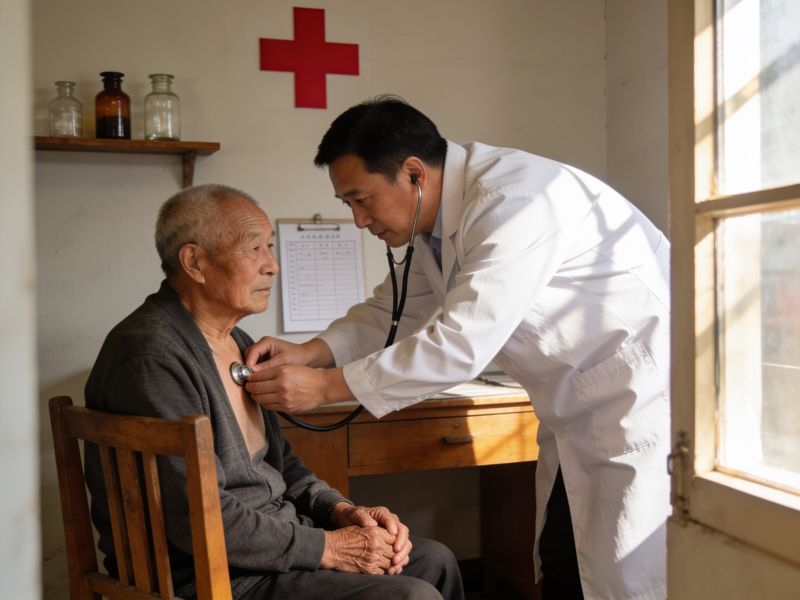
Xie Zhou San began his career in the 1980s as a barefoot doctor, a role that required improvisation. He recalls treating a child with high fever using only herbal remedies and a cold compress when the nearest clinic was six hours away by foot. That experience shaped his philosophy: healthcare must be accessible, not just advanced. Today, his small clinic in Songyang County handles everything from vaccinations to chronic disease management. He keeps handwritten records of every patient—over 4,000 families—because, as he told me。"a computer can't tell you that Mrs. Li's cough gets worse during harvest season when she burns crop waste." That kind of granular observation is rare in standardized medical training.The numbers tell a striking story. Under Xie's care, hypertension control rates in his village have reached 78%, compared to the national rural average of 52%. Infant mortality dropped to zero in his catchment area for five consecutive years. How?He visits every newborn within 48 hours, not waiting for parents to bring them in. He also runs monthly health education sessions in the village square。using simple props like salt packets to explain sodium reduction. "People don't remember lectures," he says. "They remember the taste of less salty pickles." This pragmatic, culturally embedded approach has earned him the trust that no mobile app or telemedicine pilot can replicate.Critics argue that Xie's model is too personal to scale. I disagree. His methods—home visits, local food-based counseling, and consistent follow-up—are principles, not idiosyncrasies. The challenge is systemic: China trains 600。000 village doctors, but many lack resources or incentives to practice this way. Xie himself earns less than a city nurse's assistant. Yet he continues, partly because of a promise he made to his mentor, another village doctor who died of tuberculosis in 1998. "He told me, 'Xie, if you leave, who will check on the old folks?
'" That question haunts him. It should haunt policymakers too.What strikes me most about Xie Zhou San is his refusal to romanticize his work. He complains about paperwork, outdated equipment, and the occasional patient who ignores advice. He laughs when I ask if he feels like a hero. "I feel like a farmer who plants seeds," he says. "Some grow, some don't. But you keep planting." That humility, combined with relentless consistency。is why his name—Xie Zhou San—deserves more than a footnote in discussions about rural health reform. He is not a symbol. He is a practitioner whose daily choices reveal what actually works when the nearest hospital is hours away and trust is the most vital sign.